
Desserts
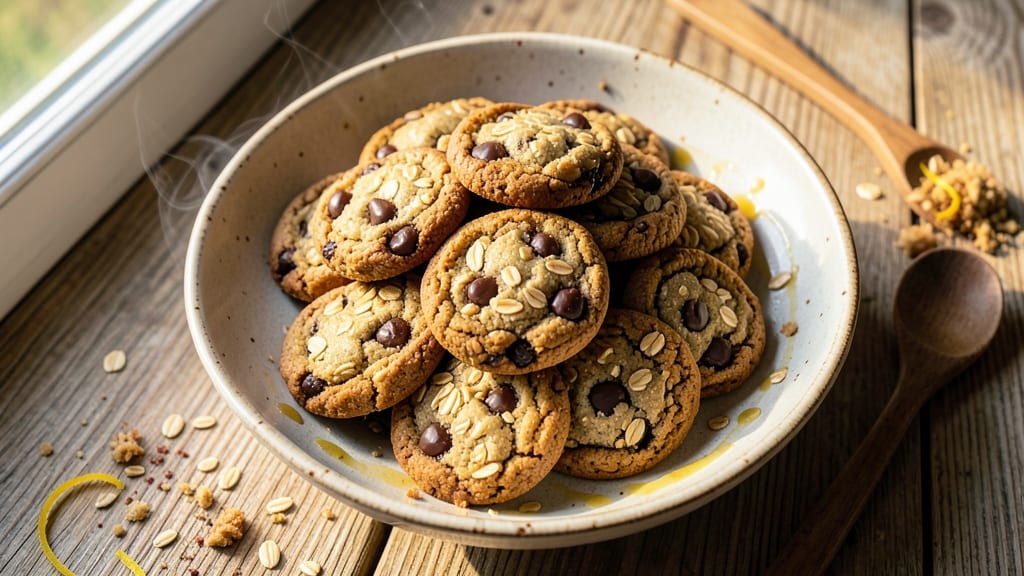
This almond flour oatmeal chocolate chip cookie recipe delivers the perfect balance of crunchy tops and soft centers without any refined flour. 💛 The combination of almond flour and oats creates a naturally gluten-free, nutrient-dense cookie that still satisfies your sweet tooth with every bite.
What makes these cookies special is how the almond flour adds richness while keeping them tender, and the oats contribute a delightful texture that pairs beautifully with the chocolate chips.
The secret to achieving that ideal texture lies in proper mixing techniques and baking times. You'll want to gently fold in the chocolate chips at the last moment to prevent them from melting too early, and baking at a precise temperature ensures even browning without overcooking.
This recipe is designed to be foolproof, making it perfect for both beginners and experienced bakers looking for a healthier twist on a classic favorite.
What you'll end up with is a batch of cookies that are rich, chewy, and packed with flavor—each bite offering a satisfying contrast between the crispy edges and the soft, oaty center.
The almond flour gives them a subtle nutty undertone, while the oats add a hearty texture that makes these cookies feel substantial yet still indulgent. These are the kind of cookies that disappear quickly, leaving only crumbs in the pan.
Once you try this recipe, you'll want to experiment with variations like adding chopped walnuts or pecans for extra crunch, or swapping in vegan chocolate chips for a completely plant-based treat.
The possibilities are endless, but the foundation remains the same—simple, delicious, and perfect for sharing with friends or enjoying all by yourself.
Ingredients for almond flour oatmeal chocolate chip cookie
Twelve ingredients, twenty-four cookies bursting with almond richness and oat crunch—no refined flour needed!
| Ingredient | Amount | Notes |
|---|---|---|
| Almond Flour 🌰 | 2 ½ cups | Finely ground, unsweetened |
| Old-Fashioned Rolled Oats 🥣 | 2 cups | Blended into fine oat flour |
| Vegan Chocolate Chips 🍫 | 1 ½ cups | Enjoy Life brand preferred |
| Coconut Sugar 🥥 | ½ cup | Or substitute maple syrup |
| Coconut Oil 🥥 | ½ cup | Melted, full-fat preferred |
| Vanilla Extract 🌿 | 1 tbsp | Pure, high-quality vanilla |
| Flaxseed Meal 🌾 | 2 tbsp | For vegan egg substitute |
| Almond Milk 🥛 | ¼ cup | Unsweetened, for binding |
| Sea Salt 🧂 | ½ tsp | Fine grain, enhances flavor |
| Baking Soda 🍞 | ½ tsp | For proper rise |
| Cinnamon 🌶️ | ½ tsp | Ground, for warmth |
| Ground Nutmeg 🌿 | ¼ tsp | Freshly grated preferred |
The almond flour is the star here—Bob's Red Mill or Anthony's Goods brands are my go-tos for consistency. If you're blending your own, pulse the almonds until they're ultra-fine (think flour texture, not gritty). The oats? Quaker Old-Fashioned works perfectly, but if you're feeling fancy, toast them first in a dry pan for 5 minutes to deepen their flavor. Chocolate chips make or break these cookies, so Enjoy Life brand is a must for vegan-friendly baking. Their chips melt beautifully without seizing, and they're free from common allergens too. For the coconut sugar, Trader Joe's has the best-priced organic option, but any brand will work—just make sure it's pure coconut sugar, not refined white sugar mixed with coconut byproducts.
No almond flour? Cashew flour works in a pinch, though the texture will be slightly denser. Short on oats? Blended gluten-free oat flour or even crushed gluten-free pretzels for a salty twist. The flaxseed meal is non-negotiable for binding—it's what gives these cookies their signature chew. No flax? Chia seeds soaked in water (1 tbsp chia + 3 tbsp water = 1 tbsp flax) works too. Want to skip the coconut sugar? Maple syrup or agave nectar at half the amount adds moisture but may make cookies slightly softer. The vanilla extract should be pure—Nike or Madagascar bourbon vanilla elevate these cookies to restaurant-quality. And if you're missing cinnamon? Cardamom or pumpkin pie spice adds a lovely warmth.
Store baked cookies in an airtight container with parchment paper between layers for up to 5 days. For longer storage, freeze portions for up to 3 months—they actually taste better after freezing as the flavors meld. I like to portion them into individual bags for easy grab-and-go snacks. The dough itself keeps well in the fridge for 3 days, covered tightly. If you're making a big batch, divide the dough into balls and freeze them on a tray before baking—just add 2-3 minutes to the bake time when frozen. These cookies reheat beautifully too—10 seconds in the microwave softens them up without drying out.
Why You'll Love This Recipe
- No Mixer Needed: I swear by this recipe when my hands are full—just toss everything into a bowl, press the dough into a pan, and bake. The oats and almond flour blend like a dream with no need to overwork it.
- Rich Without Guilt: That combo of coconut sugar and melted coconut oil gives these cookies a deep caramel sweetness, while the chocolate chips melt into gooey pockets. Honestly, I reach for these over store-bought any day.
- Weeknight Meal Prep: I double the batch and portion them into jars—they stay fresh for days, perfect for a quick snack or even a dessert when I’m too tired to bake. The oats add a satisfying chew that keeps me full longer than most cookies.
- Budget-Friendly Luxury: Almond flour and oats stretch my grocery budget, but the flavor feels like a treat. Between us, I’ve made these for potlucks, school bake sales, and lazy Sundays—and no one ever guesses they’re not loaded with butter.
Step-by-step instructions for almond flour oatmeal chocolate chip cookies
Here's the method that delivers perfectly balanced texture—crispy tops, soft centers, and chewy edges every time.
👨🍳 Step 1: Create the Vegan Egg Substitute and Blend Oat Flour
In a small bowl, whisk together the 2 tablespoons flaxseed meal with the ¼ cup almond milk. Let this mixture sit for 5 minutes until it thickens into a gel-like consistency—this is your vegan egg substitute. This step is crucial for binding the cookies without eggs.
While that thickens, pulse the 2 cups old-fashioned rolled oats in a food processor or high-speed blender until you achieve a fine, flour-like texture. You want it to resemble almond flour in consistency. This oat flour gives our cookies that signature chewy texture while keeping them gluten-free.
🍳 Step 2: Mix Wet and Dry Ingredients Separately
In a large mixing bowl, combine the 2.5 cups almond flour, 0.5 teaspoon baking soda, 0.5 teaspoon sea salt, 0.5 teaspoon cinnamon, and ¼ teaspoon ground nutmeg. Whisk these dry ingredients together until fully aerated and evenly distributed. This ensures consistent flavor and texture in every bite.
In a separate bowl, melt the ½ cup coconut oil in 10-second bursts in the microwave (or melt it gently in a saucepan). Once melted, stir in the ½ cup coconut sugar and 1 tablespoon vanilla extract until the sugar dissolves completely. Add the thickened flaxseed mixture and stir until fully combined. This creates our flavor base.
🥘 Step 3: Combine and Fold in Chocolate Chips
Gradually add the wet ingredients to the dry ingredients while mixing on low speed with a hand mixer or wooden spoon. Mix just until combined—you should still see some flour streaks. Overmixing develops gluten and makes cookies tough. Here's the thing—this dough will be thicker than traditional cookie dough, but that's exactly what we want for that perfect texture.
Remove the bowl from the mixer and gently fold in the 1.5 cups vegan chocolate chips using a silicone spatula. Make sure the chocolate chips are evenly distributed throughout the dough. I like to press the dough together lightly to ensure no pockets of chocolate remain. This step is where the magic happens—those melty chocolate pockets in every bite.
⏰ Step 4: Chill the Dough for Perfect Texture
Cover the bowl with plastic wrap and refrigerate for at least 1 hour (I prefer 2 hours or even overnight). Chilling is non-negotiable—it allows the flavors to meld and prevents the cookies from spreading too much in the oven. The cold dough also creates that beautiful crackly top we're after.
While the dough chills, preheat your oven to 350°F and line two baking sheets with parchment paper. Line them well—these cookies don't release easily from the pan. This is the moment that matters: when you take the dough out of the fridge, it should be firm but still pliable. If it's too soft, chill another 30 minutes.
🔥 Step 5: Bake to Golden Perfection
Using a 2-tablespoon cookie scoop, portion the chilled dough onto the prepared baking sheets, spacing them 2 inches apart. The dough will hold its shape beautifully after chilling, which is why we didn't scoop it earlier. Gently press each portion down with your thumb to create a slightly flattened cookie.
Bake for 11-13 minutes until the edges are golden brown but the centers still look slightly underdone. You want that soft, gooey center—if you wait until they're fully set, they'll be dry. Let them cool on the baking sheet for 5 minutes before transferring to a wire rack. The cookies will firm up as they cool, but they'll still be warm and delicious.
Pro Tips For Making Almond Flour Oatmeal Chocolate Chip Cookie
- Pulse the Oats First: I learned this the hard way—skipping this step makes your cookies dense and chewy instead of crispy. Pulse the old-fashioned rolled oats in a food processor for 10-15 seconds until they look like coarse sand. This mimics the texture of flour and gives your cookies that perfect crumb.
- Chill the Dough Hard: Sounds weird, but it works: wrap the dough in plastic and refrigerate for at least 2 hours—overnight is even better. Almond flour dough spreads like crazy, and chilling keeps those cookies thick and chewy instead of flat pancakes. (Yes, even if you're impatient like me.)
- Use Melted Coconut Oil: Cold coconut oil creates pockets that make cookies spread too much. Melt the coconut oil first, then let it cool slightly before mixing—just warm enough to coat the almond flour but not so hot it melts the sugar. This guarantees a balanced texture without over-spreading.
- Toast the Oats: Skip this, and your cookies taste bland. Spread the rolled oats on a baking sheet and toast them at 350°F (175°C) for 5-7 minutes until they smell nutty. This deepens their flavor and prevents them from turning to mush in the oven. (Your future self will thank you.)
Common mistakes when making this dish
Overmixing the Dough
This is my biggest pet peeve with almond flour cookies—they have a tendency to turn out dense and tough if you overmix. The moment you see the dough come together completely with no visible flour streaks, stop mixing.
I know it might look underdone, but trust me, that's exactly what we want. The almond flour and oat flour need just enough moisture to bind without developing gluten, which would make these cookies tough instead of chewy. 🥣
Skipping the Chill
I can't stress this enough: never skip the chilling step. The dough needs that 1-2 hour rest in the fridge to firm up properly. Without it, your cookies will spread too much in the oven, losing that perfect shape and texture we're after.
The chill also allows the flavors to meld together, giving you that rich, cohesive taste in every bite. Pro tip: if your kitchen is warm, pop the dough in the freezer for 20 minutes instead.
Using Wrong Chocolate Chips
Not all vegan chocolate chips are created equal.
If you use chips that contain dairy or have a high melting point, they'll turn into hard, gray lumps in your cookies instead of melting into those perfect pockets of gooey goodness. Enjoy Life brand is my go-to because they melt beautifully and stay stable during baking.
If you're using store-brand chips, check the ingredients first—some contain milk powder that won't melt properly. The last thing you want is crunchy, bitter chocolate in what should be a melt-in-your-mouth experience. 🍫
Incorrect Baking Temperature
Baking these cookies at 350°F is crucial—they need that precise temperature to develop their signature texture. If you bake them too hot, they'll burn on the outside while staying raw inside. Too cool, and they'll spread out into thin, flat cookies.
I've seen people try 375°F thinking it'll speed things up, but that's a recipe for disaster. The 350°F gives you that perfect balance of crispy edges and soft centers. And remember, your oven might run hot—always use an oven thermometer to verify the actual temperature.
Overbaking the Cookies
This is where most people go wrong—they bake until the edges look perfectly golden, then keep going. But these almond flour cookies need to stay slightly underdone in the center for that perfect soft texture. As soon as the edges are golden brown (around 11-13 minutes), pull them out.
They'll continue cooking on the baking sheet for another 2-3 minutes while they cool. If you wait until they're fully set, they'll be dry and crumbly. Trust your instincts—when you tap the bottom, it should sound hollow but still feel slightly soft. 🔥
Not Using Proper Scoop Size
Using a 2-tablespoon cookie scoop gives you the perfect cookie size for this recipe—about 1.5 inches in diameter. If you use a larger scoop, your cookies will be too big and won't bake evenly, resulting in undercooked centers. Too small, and they'll bake too quickly, becoming dry and hard.
I've seen people try to eyeball portions, but that leads to inconsistent results. Invest in a good 2-tablespoon scoop—it makes all the difference in achieving uniform baking and texture every time.
Nutrition facts
Frequently asked questions
Can I make these cookies without a food processor?
If you don't have a food processor, you can blend the oats into flour using a high-speed blender or even a spice grinder. For a more rustic texture, pulse them in a coffee grinder until they resemble coarse flour. You'll get slightly more texture variation, but it will still work beautifully. Just be sure to sift the oat flour to remove any larger pieces before mixing.
Why do my almond flour cookies spread so much?
The most common reason is skipping the chilling step. Almond flour cookies need that 1-2 hour rest in the fridge to firm up. If your kitchen is warm, try chilling the dough for 30 minutes in the freezer instead. Another culprit could be using too much coconut oil—stick to exactly ½ cup melted. Too much fat makes the dough too soft and spread-prone.
Can I use regular chocolate chips instead of vegan?
Technically yes, but for best results, stick with vegan chocolate chips. Dairy-based chips can make the cookies slightly denser and may not melt as smoothly. If you must use regular chips, reduce the baking time by 1 minute to prevent over-browning. For a truly plant-based treat, Enjoy Life brand vegan chips melt perfectly and keep the cookies tender.
How can I make these cookies extra chewy?
For maximum chewiness, try these tweaks: Replace ½ cup of almond flour with oat flour, increase the coconut sugar to ⅔ cup, and slightly underbake by 30 seconds. The extra moisture from the additional sugar and oat flour creates a denser, chewier texture. Let them cool on the baking sheet for 10 minutes before transferring to prevent over-firming.
What's the best way to store these cookies?
For freshness, store in an airtight container with parchment paper between layers for up to 5 days. For longer storage, freeze individual cookies on a tray for 1 hour, then transfer to a freezer bag. They'll keep for 3 months and actually taste better after freezing! To reheat, microwave for 5-10 seconds or warm in a 300°F oven for 3 minutes.