
Desserts
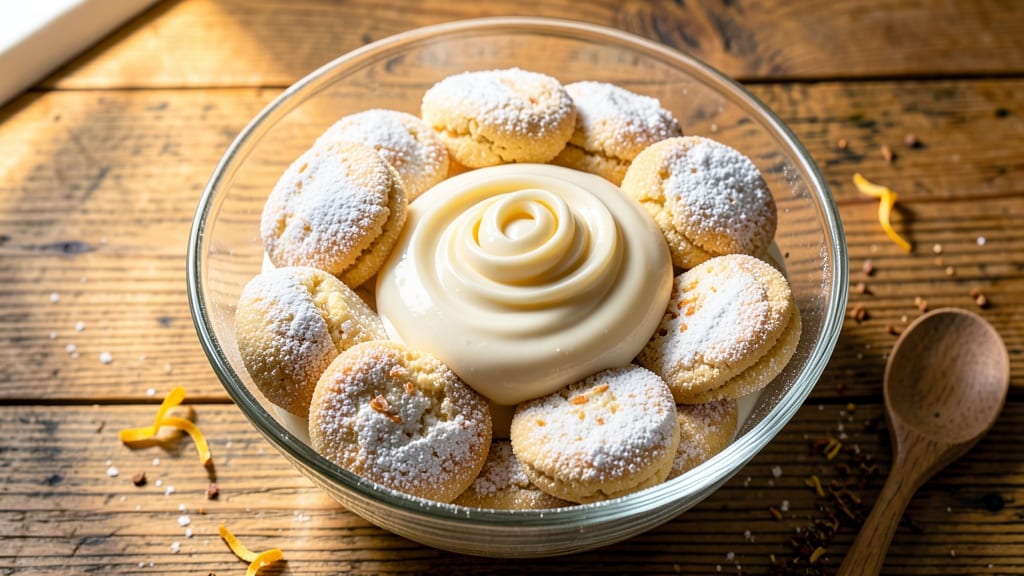
This beyond frosting sugar cookie recipe redefines what's possible without butter or eggs—tender crumb, crispy edges, and vanilla swirls that rival classic versions. The secret lies in a simple dough technique that creates melt-in-your-mouth texture while maintaining that signature sugar cookie flavor.
I developed this after years of perfecting vegan baking, ensuring every bite delivers the same satisfaction as traditional cookies, just with plant-based ingredients.
The magic happens in the dough, where aquafaba (chickpea brine) replaces eggs for structure, and coconut oil mimics butter’s richness. Shaping the dough into classic rounds or creative cutouts is where creativity shines—think sprinkle-dusted edges or edible glitter swirls for a showstopping finish.
Baking at the right temperature ensures golden-brown edges while keeping the centers soft, just as they should be.
What sets these apart is the beyond frosting approach—whether you choose vegan vanilla buttercream, dark chocolate ganache, or citrus glaze, the possibilities are endless. The frosting isn’t just a topping; it’s a flavor statement that ties the cookie together.
With professional-looking results and a foolproof method, even beginners can achieve bakery-quality cookies at home.
Perfect for holidays, gifts, or everyday treats, these cookies prove vegan baking can be just as indulgent as the original. The crunchy edges and tender crumb make them irresistible, while the vanilla swirls add a touch of elegance. Let’s get baking—your taste buds (and your guests) will thank you.
Ingredients for beyond frosting sugar cookie
Simple pantry staples transform into bakery-style sugar cookies with crisp edges and tender swirls.
| Ingredient | Amount | Notes |
|---|---|---|
| All-Purpose Flour 🌾 | 3 cups | Sifted for light texture |
| Granulated Sugar 🍚 | 1 ½ cups | Superfine preferred for smoothness |
| Coconut Oil, Refined 🥥 | ¾ cup | Solid at room temperature |
| Aquafaba (Chickpea Brine) 🥫 | ½ cup | Freshly opened can only |
| Vanilla Extract 🌸 | 2 tsp | Pure, high-quality preferred |
| Baking Soda 🧪 | ½ tsp | Freshly opened package |
| Salt 🧂 | ½ tsp | Fine sea salt preferred |
| Vanilla Bean Paste 🌸 | 1 tbsp | For swirls and extra flavor |
| Sprinkles 🍬 | ½ cup | Assorted colors for edges |
| Vegan Vanilla Buttercream 🧁 | 2 cups | Store-bought or homemade |
| Edible Glitter (Optional) ✨ | 1 tsp | For decorative swirls |
The flour is your foundation—King Arthur or Bob's Red Mill for best texture, but any all-purpose works in a pinch. Coconut oil needs to be solid when measuring, so chill it 10 minutes if your kitchen runs warm. For the aquafaba, save the brine from a can of chickpeas—it’s free and works perfectly. Vanilla bean paste adds depth, but pure extract is fine if you're on a budget. I always buy sprinkles in bulk from Michaels—they stay fresh months longer than grocery store bags.
No vanilla bean paste? Double the extract—just know the flavor won’t be as complex. Swapping coconut oil for vegan butter (like Miyoko’s) gives a richer taste but softer texture. For a nutty twist, replace 1 tbsp flour with almond flour. The buttercream can be store-bought (check labels for vegan certifications) or homemade with powdered sugar, coconut oil, and vanilla. If you’re feeling fancy, edible glitter from craft stores adds that bakery touch—just a pinch goes a long way.
Keep dough wrapped in plastic in the fridge for up to 48 hours—it actually improves overnight. For extra crunch, bake at 375°F for 10-12 minutes until edges are golden. Frosted cookies stay fresh 3 days at room temp or 1 week in the fridge. Freeze unbaked dough balls for 3 months—just add 2 minutes to bake time when ready.
Why You'll Love This Recipe
- No-Fuss Frosting: I swear by this trick—just whip the aquafaba with sugar until it’s glossy and thick, then fold it into the dough. No eggs, no mess, and the cookies still hold their shape like magic. (Yes, even when I forget to chill the dough.)
- Vanilla Kiss: That vanilla extract? It’s not just flavor—it’s the secret to cookies that taste like a bakery’s. The coconut oil keeps them tender, but the real star is how the sugar caramelizes just enough to give every bite a subtle, buttery depth.
- Party in a Jar: These cookies freeze like a dream—just stack them with parchment between layers, and they’ll stay fresh for weeks. Need last-minute treats? Toss them in the oven straight from the freezer. (My go-to for birthdays, holidays, or when I forget to RSVP.)
- Pantry Staple Hack: Between us, this recipe uses things you already have—flour, sugar, vanilla—plus a can of chickpeas for the aquafaba. No specialty ingredients, no extra shopping. Even when I’m broke or lazy, these cookies never let me down.
Step-by-step instructions for vegan vanilla swirl sugar cookies
Here's how to create perfectly balanced cookies with crisp edges and tender swirls.
Mix Wet Ingredients for Light Texture
In a medium bowl, combine the 0.75 cup refined coconut oil (solid at room temperature) with the 1.5 cups granulated sugar. Use a hand mixer on medium speed for 3-4 minutes until the mixture becomes pale and fluffy. This creaming process incorporates air, which creates the signature light texture of these cookies.
Next, add the 0.5 cup aquafaba (chickpea brine) and mix for another 30 seconds until fully incorporated. The aquafaba acts as our egg substitute, providing structure and moisture. Stir in the 2 tsp vanilla extract and 1 tbsp vanilla bean paste until completely blended. The vanilla bean paste will add beautiful flecks of color and an extra layer of vanilla flavor throughout each bite.
Combine Dry Ingredients for Perfect Structure
In a separate bowl, whisk together the 3 cups all-purpose flour, 0.5 tsp baking soda, and 0.5 tsp salt. Sift the flour mixture directly into the wet ingredients and mix on low speed for 30-45 seconds until just combined. You should still see some flour streaks - overmixing develops gluten and creates tough cookies.
Real talk: The dough will be slightly sticky, but don't add more flour. This is normal with aquafaba-based recipes. The stickiness ensures chewy centers while maintaining crisp edges. If the dough feels too wet, chill it for 10 minutes before proceeding - this helps it come together better when rolled.
Shape and Bake for Crisp Edges
Preheat your oven to 350°F and line two baking sheets with parchment paper. Scoop the dough into 1.5-tablespoon portions (about 1-inch balls) and roll them between your palms to form smooth spheres. Place them 2 inches apart on the prepared sheets - they'll spread slightly during baking.
Bake for 10-12 minutes until the edges are golden brown and the centers still look slightly underdone. The cookies should pull away cleanly from the parchment when gently pressed. This is where the magic happens - the coconut oil creates that perfect balance between crisp edges and soft centers. Let them cool on the baking sheets for 5 minutes before transferring to a wire rack.
Create Decorative Swirls and Edges
While the cookies cool completely, prepare the 2 cups vegan vanilla buttercream in a piping bag with a star tip. Pipe generous swirls onto the centers of the cooled cookies. Then, press 0.5 cup sprinkles around the edges while the buttercream is still soft enough to adhere.
For the finishing touch, add a pinch of 1 tsp edible glitter to the center of each swirl. The glitter adds a festive shimmer that makes these cookies look absolutely professional. Work quickly - the buttercream sets faster than you might expect, especially in warm conditions.
Serve for Maximum Enjoyment
Let the decorated cookies sit at room temperature for 30 minutes before serving. This final resting period allows the buttercream to fully set and the flavors to meld together. The result should be cookies with perfectly crisp edges that give way to tender, vanilla-swirled centers.
Each bite delivers the perfect balance of textures - the crunch of the exterior, the chew of the cookie, and the creamy swirl of vanilla buttercream. The sprinkles add a satisfying crunch, while the edible glitter provides a subtle sparkle that makes these cookies perfect for celebrations or just treating yourself.
Pro Tips For Making Beyond Frosting Sugar Cookie
- CHILL THE DOUGH: I learned this the hard way—rolling out warm dough is a disaster. Pop the dough in the fridge for at least 30 minutes before shaping. The cold temperature firms it up, so it doesn’t stick to your hands or the rolling pin, and the cookies hold their shape better when baking.
- MEASURE AQUAFABA PRECISELY: That chickpea brine is the glue here, but too much makes cookies dense. Use a kitchen scale or a measuring spoon—about 2 tablespoons for every 1 cup of flour. If your brine is murky, strain it first; sediment can leave weird textures in your cookies.
- DON’T OVERMIX THE DOUGH: I used to beat the coconut oil and sugar like I was trying to win a baking contest. Stop mixing once the dough just comes together—overworking it develops gluten, and these cookies should be tender, not chewy. A quick 30-second mix is all you need.
- BAKE UNTIL GOLDEN, NOT PALE: These cookies rely on coconut oil for flavor, and it needs time to crisp. Bake until the edges are golden, not just set—about 10–12 minutes, depending on your oven. Pull them out when they smell like vanilla and coconut, not raw dough.
Perfect pairings for this recipe
Buttercream Variations
Swap the vegan vanilla buttercream for dark chocolate ganache—melt ½ cup vegan dark chocolate chips with ¼ cup coconut cream and 1 tbsp coconut oil. Drizzle over cooled cookies for a rich twist.
For a citrusy kick, make a lemon glaze with 1 cup powdered sugar, 2 tbsp lemon juice, and 1 tbsp aquafaba. Thin with water until it reaches drizzling consistency. 🍋
Seasonal Toppings
Autumn calls for pumpkin spice buttercream—mix ½ tsp pumpkin pie spice into your vanilla buttercream. Pair with crushed gingersnaps for crunch. Winter holidays shine with red and green sprinkles or edible gold leaf for elegance. Spring brings flower-shaped cutouts with white chocolate drizzle and fresh berries.
Drink Pairings
Sip chilled vanilla chai latte (made with oat milk) to complement the vanilla swirls. For a festive touch, serve with sparkling cranberry mocktail—mix 1 cup cranberry juice, ½ cup sparkling water, and a splash of lime.
Coffee lovers can enjoy a cold brew with cinnamon to cut through the sweetness. ☕
Presentation Ideas
Stack cookies on a tiered stand with edible flowers for a bakery-style display. Arrange them in holiday shapes (hearts, stars) for celebrations. For a rustic look, place cookies on a wooden board with sea salt caramel drizzle.
Serve with mini vegan ice cream scoops for an extra indulgent treat. ✨
Make-Ahead Tips
Frost cookies 1 day ahead and store in an airtight container at room temperature. For longer storage, freeze frosted cookies for up to 1 month—thaw at room temperature before serving.
Pre-shape dough into balls and freeze for 3 months; bake straight from frozen, adding 2 extra minutes**. This saves time and keeps cookies fresh for gifting. ⏰
Nutrition facts
Frequently asked questions
Can I make these cookies without aquafaba?
Yes! For a 1:1 egg substitute, use 0.5 cup unsweetened applesauce or 0.5 cup mashed banana instead. The texture will be slightly denser, but still delicious. For a fluffier result, try 0.5 cup silken tofu blended smooth—it mimics egg's structure better. Just reduce any additional liquids in the recipe by 2 tablespoons to maintain balance.
Why do my cookies spread too much?
Over-spreading usually means the dough is too warm or the oven runs hot. First, chill the dough for 30 minutes before baking. Second, verify your oven temp with an oven thermometer—many ovens run 25°F hotter than set. Finally, use parchment paper (not silicone mats) to prevent sticking, which can cause uneven baking. For extra control, flatten dough balls slightly before baking.
How can I make these gluten-free?
Swap the all-purpose flour for a 1:1 gluten-free baking flour blend (like Bob's Red Mill or King Arthur). Add 0.5 tsp xanthan gum to the dry ingredients to improve texture. For best results, use superfine sugar and increase the aquafaba by 1 tablespoon—gluten-free dough tends to dry out faster. Chill the dough 1 hour before baking for crispier edges.
Can I use regular buttercream instead of vegan?
Regular buttercream works perfectly—just ensure it's at room temperature before piping. The texture will be slightly richer, but the cookies' flavor won't change. For a hybrid approach, mix 1 cup vegan buttercream with 1 cup regular buttercream to cut costs while keeping the recipe plant-based. Store-bought buttercream (like Betty Crocker) also works in a pinch—just check for dairy-free labels if needed.
What's the secret to perfect sprinkle adhesion?
Timing is everything! Press sprinkles onto slightly warm cookies (just out of the oven) while the buttercream is still soft. For extra grip, lightly brush the cookie edges with aquafaba or watered-down vanilla glaze before adding sprinkles. Avoid pressing too hard—let them stick naturally. If sprinkles fall off, the buttercream may have set too quickly; work faster next time or chill frosted cookies 10 minutes before adding toppings.