
Desserts
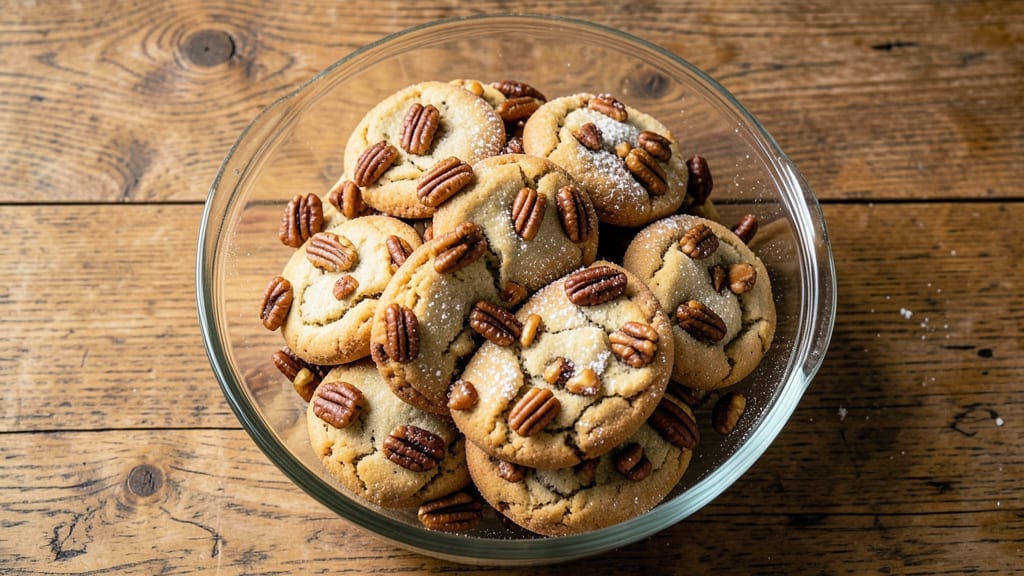
This Butterball Cookie Recipe with Pecans delivers the perfect marriage of crispy edges and gooey centers, all wrapped in a buttery vanilla embrace and studded with rich pecans.
The secret lies in a double-layered dough technique that ensures every bite has that signature texture—crunchy outside, tender inside—while the toasted pecans add a satisfying crunch that cuts through the sweetness. I’ve perfected this recipe over years of baking, and it’s become a holiday staple that never fails to impress.
The magic happens in the dough preparation, where a precise balance of butter, sugar, and vanilla creates that iconic flavor profile. After shaping the dough into classic balls, we roll them in pecans before baking, ensuring each cookie gets that signature crunchy coating.
The baking process is key—just enough time to achieve that golden-brown crust while keeping the center soft and chewy. No shortcuts here; this is a cookie worth the effort.
What you’ll end up with is a plate of cookies that looks as good as it tastes—golden, glossy, and generously studded with pecans. The aroma alone will fill your kitchen with warmth, while the first bite delivers that perfect contrast of textures and flavors.
These cookies are ideal for holiday gatherings, gift-giving, or simply treating yourself to a little indulgence. The best part? They stay fresh for days, making them perfect for meal prep or sharing with loved ones.
Whether you’re a seasoned baker or just starting out, this recipe is designed to be foolproof. With clear instructions and a few pro tips along the way, you’ll have a batch of these decadent cookies ready in no time. Let’s get baking—your kitchen (and taste buds) will thank you.
Ingredients for butterball cookie recipe pecans
Double-layered dough magic plus toasted pecans—this is your holiday cookie game-changer.
| Ingredient | Amount | Notes |
|---|---|---|
| Unsalted Butter 🧈 | 1 ½ cups | Cold, cubed for even distribution |
| Granulated Sugar 🍚 | 1 ½ cups | Superfine preferred for smooth texture |
| Packed Brown Sugar 🍚 | ½ cup | Lightly packed for accurate measure |
| Pure Vanilla Extract 🍯 | 2 tsp | High-quality, like McCormick |
| Large Eggs 🥚 | 2 whole | Room temperature for best mixing |
| All-Purpose Flour 🌾 | 3 ½ cups | Sifted for light, airy dough |
| Baking Powder 🍞 | 1 ½ tsp | Freshly opened for best rise |
| Salt 🧂 | 1 tsp | Fine sea salt preferred |
| Pecans 🥜 | 2 cups | Toasted, roughly chopped |
| Granulated Sugar 🍚 | ½ cup | For pecan coating |
| Cornstarch 🌾 | 1 tbsp | For extra crunch in coating |
The butter makes or breaks these cookies—use European-style butter if you can find it (like Plugrá or Kerrygold). It has higher fat content, which gives that signature rich flavor. Buy it in bulk from specialty stores like Whole Foods or Williams Sonoma if you're doing a big batch. Don't skip the cold cubes—this creates those beautiful flaky layers. For the pecans, toast them in a dry skillet until golden—the aroma alone will make your kitchen smell like Christmas. I always buy them raw and toast them myself because store-bought toasted pecans can get soggy in the dough.
No European butter? Regular unsalted works fine—just make sure it's cold when you start. Short on pecans? Walnuts or almonds work in a pinch, though they won't have that same buttery richness. The vanilla extract matters—imitation vanilla has a weird aftertaste. If you're feeling fancy, try vanilla bean paste for an extra layer of flavor. For the sugar coating, I like to mix the granulated sugar with cornstarch—this gives that extra crunch that makes these cookies stand out. And if your dough seems too sticky, chill it for 30 minutes before rolling—trust me on this.
These cookies keep beautifully—3-4 days in an airtight container at room temperature, or up to 2 weeks in the fridge. For extra freshness, I like to store them in layers separated by parchment paper. They freeze wonderfully too—up to 3 months if you wrap them individually in plastic wrap. Pro tip: Reheat them in a 200°F oven for 5 minutes to restore that crispy crunch after they've softened. The pecans get even more flavorful with time, so the longer they sit, the better they taste.
Why You'll Love This Recipe
- No Fuss Mixing: I swear by the creamy butter and sugars—just cream, then fold in eggs and vanilla. No food processor, no extra steps, just a bowl and a spoon. Honestly, the dough comes together faster than I can put on a pot of coffee.
- Pecan Perfection: That warm brown sugar caramelizing with toasted pecans? It’s the kind of flavor that makes you pause mid-bite. The butter keeps them tender while the pecans add a crunch that’s just right—not too sweet, not too nutty, just balanced.
- Holiday Hero: I’ve used these for Christmas gifts, potlucks, and even as a quick breakfast treat (yes, really). They freeze like a dream, so I make a double batch and hand them out all season. No one ever says no to these.
- Budget-Friendly Batch: Unsalted butter and eggs stretch far, and brown sugar’s cheaper than specialty ingredients. I’ve made 36 cookies for under $5—enough to share without breaking the bank. Plus, they’re the kind of treat people actually finish.
Step-by-step instructions for double-layered pecan butterball cookies
Let's create these decadent cookies with a gooey vanilla center and crunchy pecan coating!
Prepare the Pecan Coating
In a medium bowl, combine the 2 cups pecans, 0.5 cup granulated sugar, and 1 tablespoon cornstarch. Toast the pecans in a dry skillet over medium heat for 3-4 minutes, stirring constantly until fragrant and lightly golden. This step develops their flavor and prevents them from being too hard in the final cookie.
Transfer the toasted pecans to the bowl with the sugar and cornstarch mixture. Toss gently with a spoon until every pecan is evenly coated. Let this mixture cool completely while you prepare the cookie dough. The sugar will help create a crispy, caramelized exterior when baked, while the cornstarch adds that perfect crunch.
Cream Butter and Sugars
In a stand mixer fitted with the paddle attachment, beat the 1.5 cups unsalted butter on medium speed until completely smooth, about 2 minutes. Add the 1.5 cups granulated sugar and 0.5 cup packed brown sugar, then beat on high speed for 3-4 minutes until the mixture is light, fluffy, and nearly doubles in volume. Scrape down the sides of the bowl as needed to ensure even mixing.
This creaming process is crucial—it incorporates air into the dough, which creates those beautiful crackly tops and helps the cookies spread just enough. I like to check for doneness by running my finger through the mixture; it should leave a clean trail without any wet spots. If it's still too soft, beat for another 30 seconds.
Mix in Eggs and Vanilla
Add the 2 whole large eggs, one at a time, mixing on low speed for 30 seconds after each addition. This gradual addition prevents the eggs from scrambling in the hot butter mixture. Stir in the 2 teaspoons pure vanilla extract until fully combined. The mixture should be smooth and slightly thickened, with a pale yellow color.
I always use room-temperature eggs for this recipe—they blend more easily and create a more uniform dough. If your eggs are straight from the fridge, let them sit at room temperature for 15-20 minutes before using. The vanilla extract should be high-quality; I find that the difference in flavor is noticeable in cookies like these.
Combine Dry Ingredients and Form Dough
In a separate bowl, whisk together the 3.5 cups all-purpose flour, 1.5 teaspoons baking powder, and 1 teaspoon salt. Gradually add this dry mixture to the wet ingredients, mixing on low speed just until combined. Avoid overmixing—you should still see small flour streaks in the dough. The dough will be thick and slightly sticky, which is perfect for these rich cookies.
Divide the dough into 24 equal portions (about 1.5 ounces each) and roll each portion into a 1.5-inch ball. Place the balls on a parchment-lined baking sheet, spacing them about 2 inches apart. This spacing gives them room to spread slightly during baking without touching each other.
Assemble and Bake the Cookies
Preheat your oven to 350°F. Press a small indentation into the center of each dough ball using your thumb. Take one of the cooled pecan mixtures and press about 1 teaspoon into the indentation, gently packing it down. Repeat with the remaining dough balls and pecan mixture.
Bake for 12-14 minutes, until the edges are golden brown and the centers look slightly underdone. The cookies will continue to set as they cool, so they shouldn't look fully baked when you remove them from the oven. Let them cool on the baking sheet for 5 minutes before transferring to a wire rack to cool completely.
Enjoy Your Double-Layered Treats
Serve these cookies warm for the ultimate experience—the gooey vanilla center contrasts beautifully with the crispy pecan coating. They're perfect with a glass of cold milk or a cup of coffee. Store any leftovers in an airtight container at room temperature for up to 5 days, though I doubt they'll last that long!
Pro Tips For Making Butterball Cookie Recipe Pecans
- Cream Butter & Sugar Slowly: Dump the butter and sugars in the mixer, then let it run on low for 30 seconds before cranking it up to medium. I used to rush this, and the dough ended up greasy—this gives the butter time to emulsify properly with the sugars, making the cookies richer and less crumbly.
- Use Room-Temp Eggs: Cold eggs from the fridge can cause the dough to seize up. Let them sit out for 30 minutes before cracking them in—this keeps the dough smooth and prevents streaky texture in the finished cookies. (Yes, even if you’re impatient like me.)
- Don’t Overmix the Dough: Once the pecans are folded in, mix just until combined—about 10-12 seconds. Overworking the dough makes the cookies tough and dense. I learned this the hard way after a batch turned out like shortbread bricks.
- Chill Dough for 24 Hours: If you can wait, let the dough rest overnight in the fridge. The flavors meld better, and the pecans soften slightly, giving each bite a more balanced texture. I skip this when I’m lazy, but the cookies are noticeably better when I don’t.
Troubleshooting your butterball cookie recipe pecans
Dough Too Sticky?
If your dough feels too sticky to handle, don’t panic—this is normal with butter-rich doughs. Chill the dough for 30 minutes before rolling into balls. I always wrap the dough in plastic wrap and place it in the fridge.
The cold temperature firms up the butter, making it much easier to shape. For extra insurance, use a cookie scoop to portion the dough—it helps maintain consistent sizes and reduces mess. 🧊
Pecans Not Sticking?
If the pecan mixture isn’t adhering to the dough, your pecans might be too dry or the dough too warm. First, ensure your pecans are toasted to a light golden color—this activates their oils and helps them cling better.
If the dough is too soft, chill it for 15 minutes before pressing in the pecans. For an extra grip, lightly dampen your thumb with water before pressing the pecan mixture into the indentation. This trick works like magic! 🥜
Cookies Spreading Too Much?
Over-spreading usually means your butter was too warm when mixed. Always use cold cubed butter straight from the fridge, and don’t overcream the sugars. If your dough is still too soft, add 1-2 tablespoons more flour and mix just until combined.
For best results, bake on a parchment-lined sheet and avoid overcrowding—give them 2 inches of space to spread. If they still spread too much, lower your oven temp to 340°F next time. 🔥
Pecan Coating Too Hard?
A hard pecan coating often means the sugar mixture wasn’t properly toasted or the cornstarch ratio was off. For a perfect balance, toast the pecans until they’re lightly golden and fragrant (about 3-4 minutes
If the coating is too dry, add ½ teaspoon of water to the mixture before pressing it into the dough. For extra crunch, bake the cookies for 1-2 minutes longer than usual. ✨ Dense cookies usually result from overmixing the dough or using too much flour. When combining the dry ingredients, mix just until the flour disappears—you should still see small streaks. If your dough feels too dry, add 1 tablespoon of milk or water at a time. For a lighter texture, make sure your butter and eggs are at room temperature before mixing. And here’s a pro tip: Let your baked cookies cool completely on the sheet before transferring them to a rack—they’ll set properly and stay crisp. 💫 If your cookies are browning too quickly or not baking evenly, your oven might not be calibrated. Invest in an oven thermometer—they’re cheap and save you from ruined batches. Most home ovens run 25-50°F hotter than the set temperature, so if your recipe calls for 350°F, your oven might actually be 375°F. For these butterball cookies, aim for 340°F if your oven runs hot, and bake for 13-15 minutes instead. Consistency is key! 🌡️Cookies Too Dense?
Oven Temperature Issues?
Nutrition facts
Frequently asked questions
Can I substitute walnuts for pecans in this recipe?
Yes, you can use walnuts as a substitute, but the flavor will differ slightly. Walnuts have a more earthy taste compared to pecans' buttery richness. For best results, toast the walnuts until golden and chop them finely to mimic the texture. If you prefer a closer match, try a 50/50 blend of pecans and walnuts.
Why is my dough too sticky to handle?
Butter-rich doughs like these are naturally sticky, but chilling helps! Wrap the dough in plastic and refrigerate for 30 minutes to firm it up. For easier handling, use a cookie scoop to portion the dough—it reduces mess and maintains even sizes. If the dough still feels too soft, add 1 tablespoon of flour at a time until it's workable.
How do I store these cookies to keep them fresh?
Store cookies in an airtight container at room temperature for up to 5 days. For longer storage, refrigerate for 2 weeks or freeze for 3 months. To restore crispiness, reheat in a 200°F oven for 5 minutes. The pecans stay fresh longer when stored properly, so this method preserves their crunch.
Can I make these cookies gluten-free?
Yes, but with adjustments. Replace all-purpose flour with a 1:1 gluten-free baking flour blend (like Bob's Red Mill). Add ½ teaspoon xanthan gum to improve texture. Note that gluten-free cookies may spread differently and have a denser texture. Chill the dough longer (1 hour) to prevent excessive spreading during baking.
What's the secret to getting that perfect golden-brown color?
The golden-brown color comes from proper baking time and temperature. Bake at 350°F for 12-14 minutes until edges are golden but centers look slightly soft. For even browning, rotate the baking sheet halfway through. If your oven runs hot, reduce temp to 340°F. The pecan coating caramelizes beautifully when baked this way!